.svg)

Auckland insulation specialists focused on doing the job right — from ceiling and underfloor insulation through to full upgrades and Healthy Homes compliance.
May 9, 2026
You’d think that once a home has underfloor insulation, the floors should feel warmer.
Sometimes they do.
But in a lot of New Zealand homes, especially older Auckland homes with timber floors, people still notice cold floors even after insulation has been installed.
That doesn’t always mean the insulation is useless. But it can mean the insulation is old, poorly fitted, too thin, damaged, incomplete, or that other issues under the home are letting cold air and moisture affect the floor.
Here are the most common reasons your floors may still feel cold, even with insulation in place.
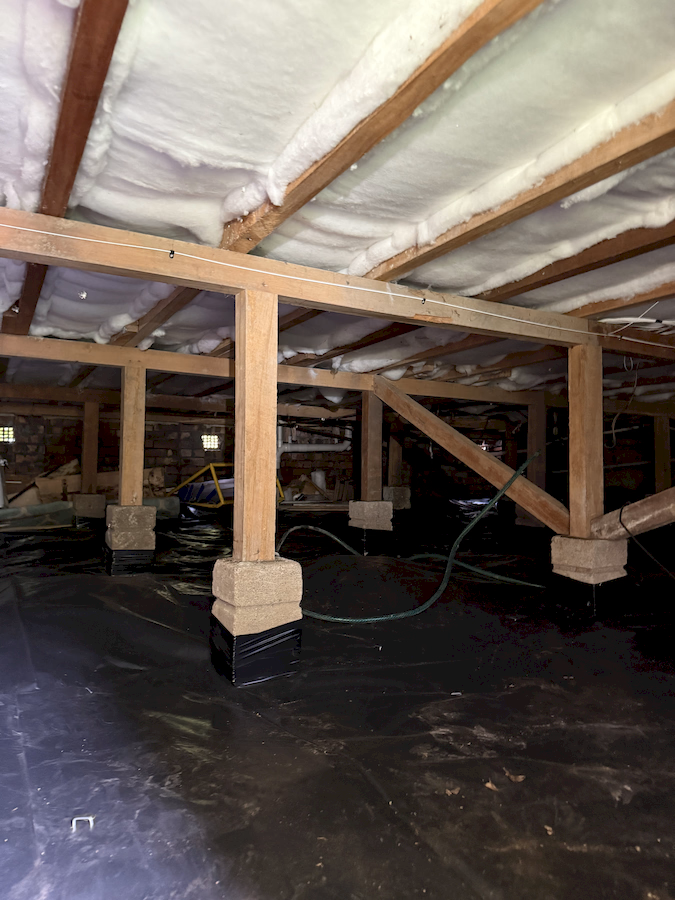
Underfloor insulation works best when it sits snugly against the underside of the floorboards.
If there is an air gap between the insulation and the floor, cold air can move through that space. This can make the floor feel cold even though insulation is technically installed.
This is one of the most common issues we see.
It can happen when insulation is:
From above, you might assume the home is insulated. But underneath, the insulation may not be doing its job properly.
A small gap repeated across a whole floor area can make a big difference.
Insulation only works properly when it forms a continuous layer.
If sections are missing, cold air can still affect the floor. This is especially common in older homes where the underfloor area is awkward, tight, or full of obstacles.
Common problem areas include:
In many older Auckland homes, the underfloor area is not neat or easy to work in. Joist spacings can vary, pipes can get in the way, and some areas need careful cutting and fitting.
A rushed install can leave a lot of cold spots behind.
Not all insulation performs the same.
Some homes have older R1.4 or R1.5 underfloor insulation that was common at the time of installation. It may still be doing something, but it may not be enough to deliver the level of comfort you expect today.
This is especially true in older homes with:
If the insulation is clean, dry, and well fitted, it may not be urgent to replace it. But if the floors still feel cold and the insulation is thin, patchy, or not sitting properly, upgrading to a modern underfloor insulation product can make a noticeable difference.
A lot of older homes have significant airflow under the floor.
Some ventilation is needed to help reduce moisture build-up, but too much uncontrolled airflow can make the floor feel cold, especially in winter.
If cold air is constantly moving under the house, any weaknesses in the insulation become more obvious.
This is why install quality matters so much. Underfloor insulation needs to be tight, secure and continuous. If it is loose or gappy, air movement can reduce the benefit.
Cold underfloor air can also come through:
In these cases, insulation helps, but draught reduction may also be needed.
Dampness under the house can make floors feel colder.
Moist ground, poor drainage, leaks, and limited subfloor ventilation can all contribute to a colder, mustier underfloor environment. Even with insulation installed, a damp subfloor can still affect comfort.
Signs of subfloor moisture issues include:
In many Auckland homes, especially older villas and bungalows, exposed ground under the house can release moisture into the subfloor space.
This is where a ground moisture barrier can make a real difference. It helps reduce moisture rising from the ground, which can improve the overall condition of the underfloor area.
Insulation and moisture control often work best together.
Rodents can do a lot of damage under a house.
They can pull insulation apart, move it out of place, nest in it, leave droppings, and create unpleasant smells. Once insulation has been disturbed or contaminated, it may no longer perform properly.
You may notice:
If pest damage is present, simply adding more insulation over the top may not solve the problem.
In many cases, contaminated or badly damaged insulation should be removed and replaced.
Some older New Zealand homes still have foil insulation under the floor.
Foil works differently from bulk insulation. It relies on reflection, so it needs to stay shiny, clean, intact and properly installed to perform well.
The problem is that old foil often becomes:
Once foil loses its reflective surface or becomes damaged, its performance can drop heavily.
There is also an important safety issue. Foil insulation should not be repaired in existing residential homes with electrical wiring. Damaged foil generally needs to be removed and replaced with a modern underfloor insulation product.
So if your home has old foil under the floor, that could be a major reason the floors still feel cold.
Sometimes the insulation is not the only issue.
Older timber floors can have gaps between boards, around skirting, or near service penetrations. Cold air can move through these gaps and make the floor feel cold even if insulation has been installed underneath.
This is common in villas, bungalows and older timber homes.
The signs can include:
In this case, underfloor insulation still helps, but draught sealing may also be needed to get the best result.
Cold floors are often noticeable because your feet feel the temperature directly.
But the overall comfort of the home depends on the whole building envelope.
If the ceiling insulation is poor, heat rises and escapes quickly. If the walls are uninsulated, the rooms can lose heat sideways. If windows are single-glazed or draughty, the home can still feel cold even after underfloor insulation has been improved.
This doesn’t mean underfloor insulation is pointless.
It just means it works best as part of a complete approach.
If your home has cold floors and poor ceiling insulation, the ceiling may actually be the first place to check. Ceiling insulation usually has the biggest impact on heat retention because warm air rises.
A good insulation assessment should look at the home as a whole, not just one area.
When someone says their floors are still cold even though they have insulation, the cause is usually one of a few things.
The insulation is there, but it is no longer sitting tight against the floor. This creates air gaps and reduces performance.
The insulation was installed quickly or cheaply, leaving gaps around pipes, corners, joists and awkward areas.
The home has foil under the floor, but it is dusty, dull, torn or damaged. In many cases, it is well past its best.
The underfloor area is damp, musty or poorly ventilated. This can make the home feel colder and may point to the need for a ground moisture barrier.
Rodents have disturbed, torn or contaminated the insulation.
The insulation may still be in place, but the product is older and lower-performing than what would normally be recommended today.
The floor may be only one part of the issue. Poor ceiling insulation, draughts, old windows and uninsulated walls can all affect comfort.
Not always.
If your existing insulation is clean, dry, well fitted and still performing reasonably, replacement may not be the best first move.
But replacement is worth considering if the insulation is:
A proper inspection should tell you whether the insulation can stay, be improved, or should be fully replaced.
In many cases, yes.
Good underfloor insulation can make timber floors feel less cold, reduce heat loss, and improve comfort. The difference is usually more noticeable in older homes, especially where there was no insulation, old foil, or badly installed insulation before.
But it needs to be done properly.
For best results, the insulation should be:
The product matters, but the install matters just as much.
A high-quality product installed badly can still perform badly.